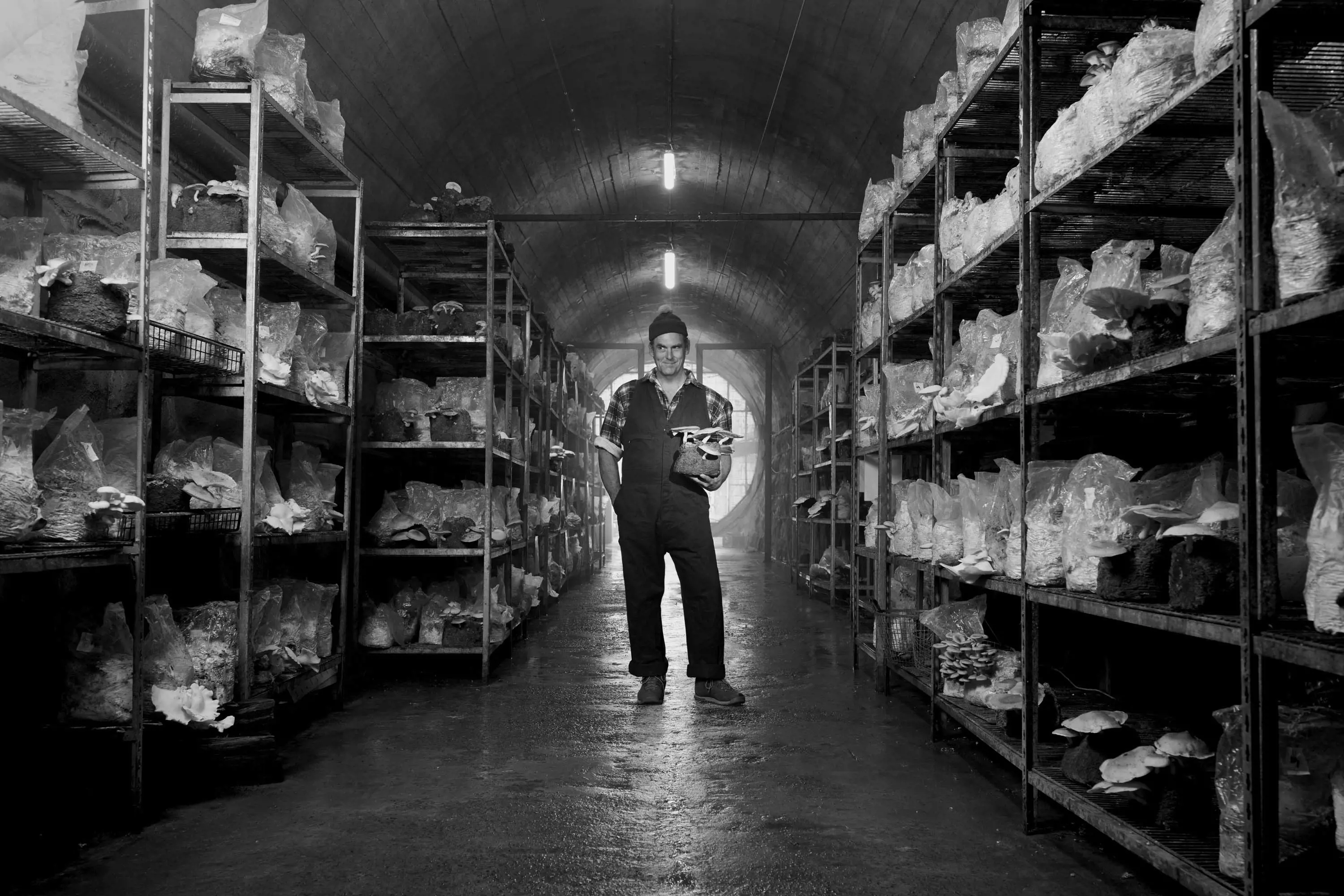
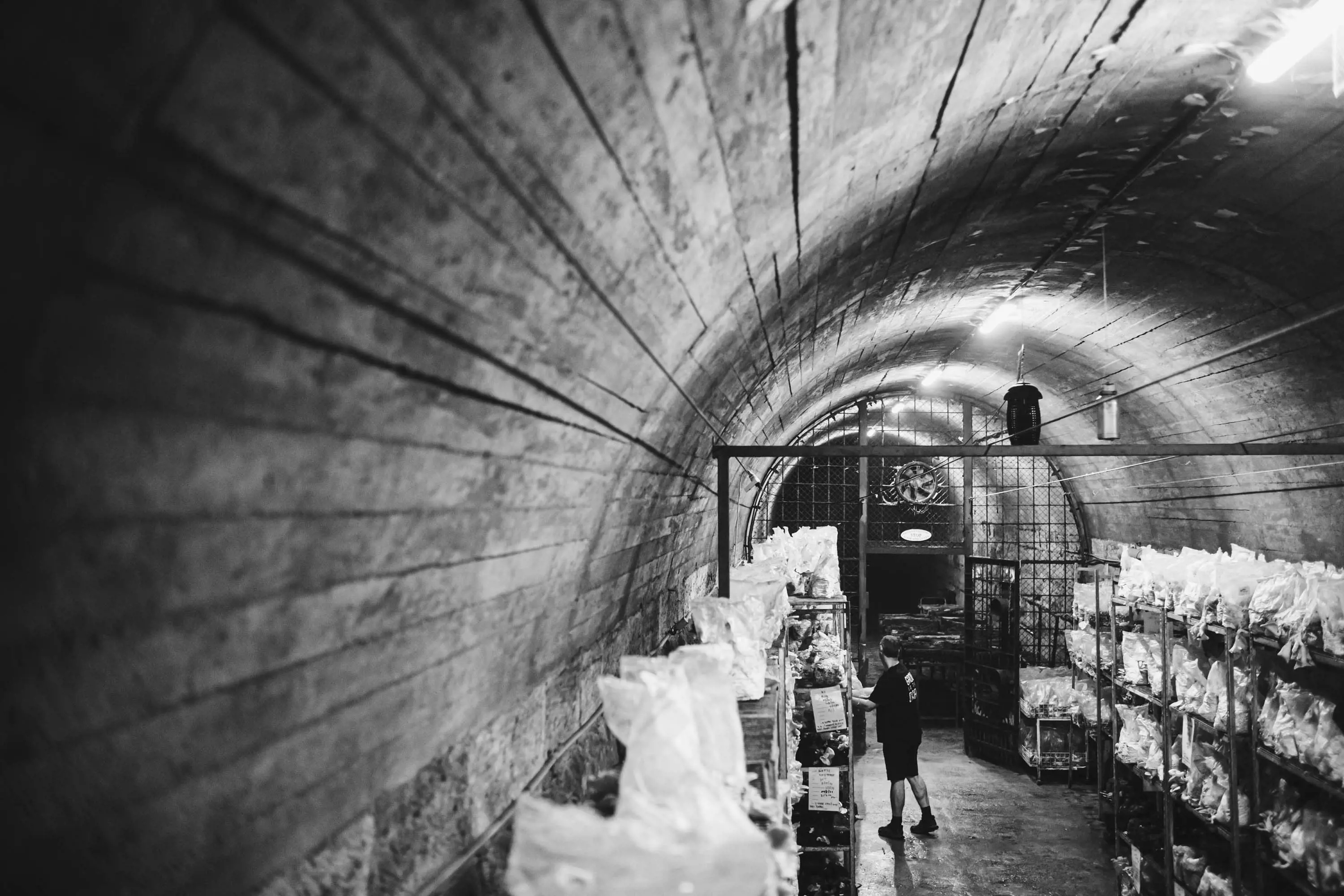
Enter a cold, dark railway tunnel near Hobart and you'll find something unexpected: rows of exotic mushrooms flourishing in the damp, still air.
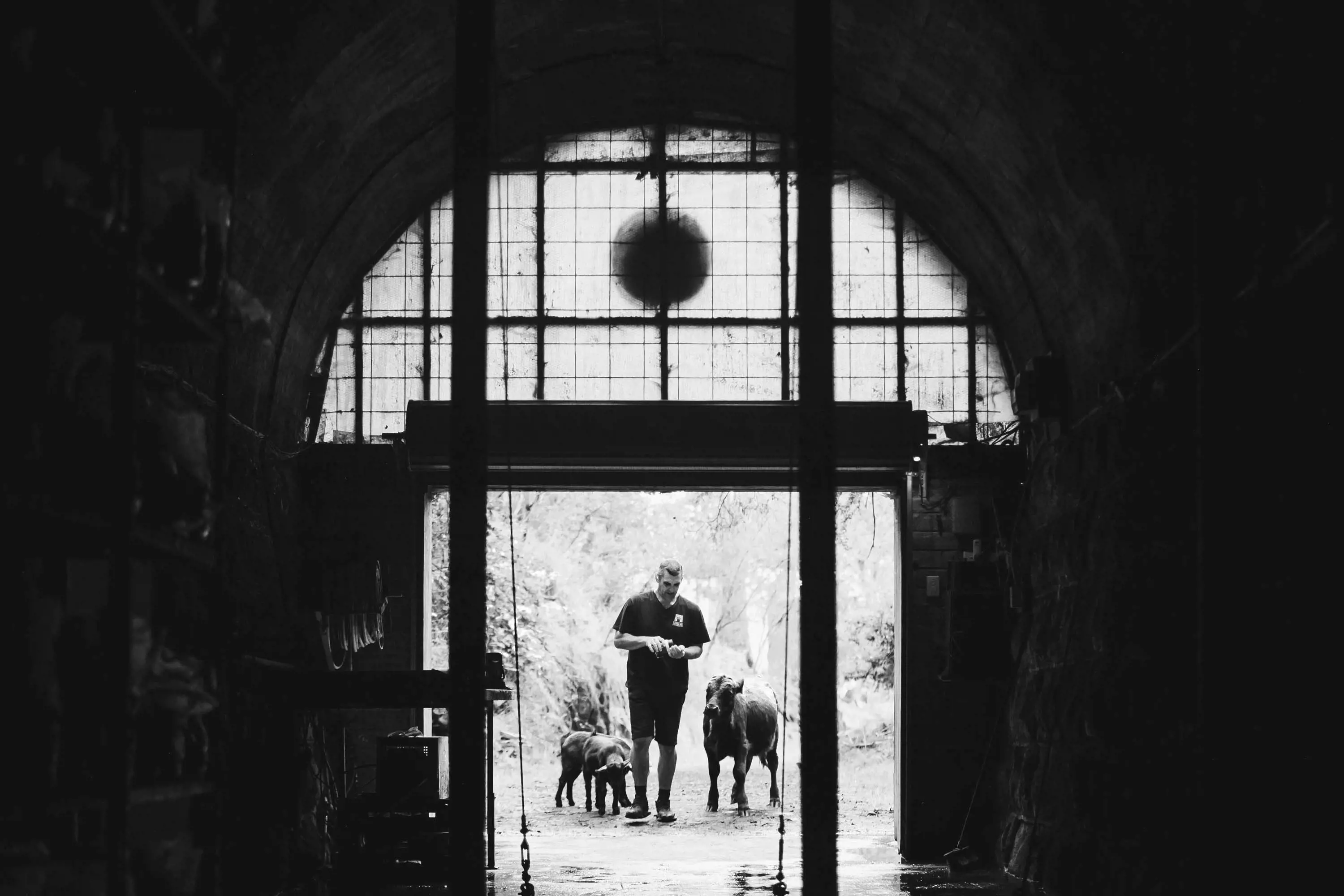
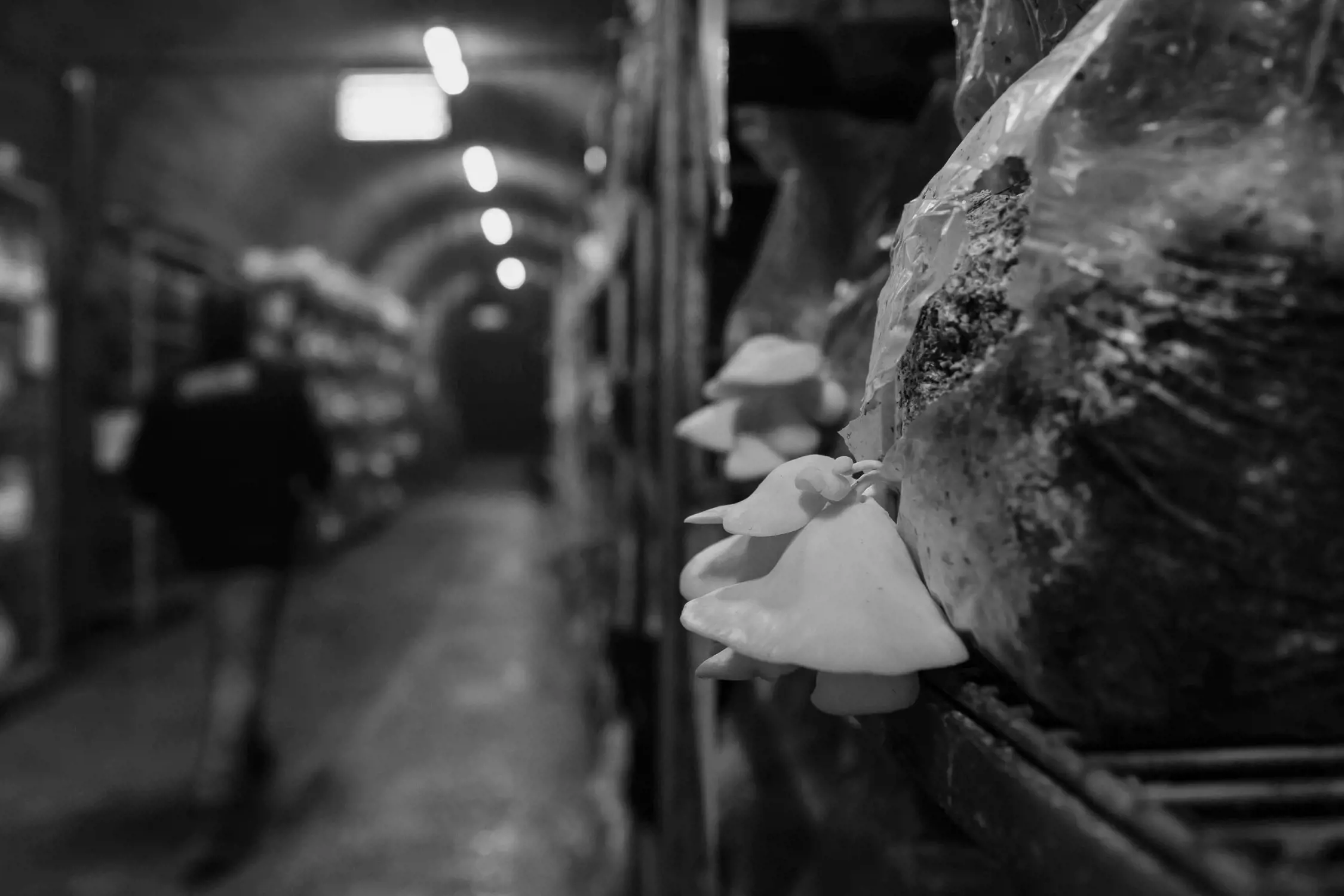
In the cool arch of an old railway tunnel, burrowed into a bushy hillside east of Hobart, grow rows of exotic mushrooms – shiitake, oyster, lion’s mane and king – destined for some of the city’s top restaurants. Presiding over each stage of their growth is Tunnel Hill Mushrooms owner Dean Smith.
Step inside the historic tunnel where Dean grows exotic mushrooms for Hobart's top restaurants.
“There’s a certain charm about the tunnel,” Dean says. “It's a challenging grow space. But it's a constant environment … it traps the humidity and it has a natural draw of air as well, which is really important for mushroom growing.”
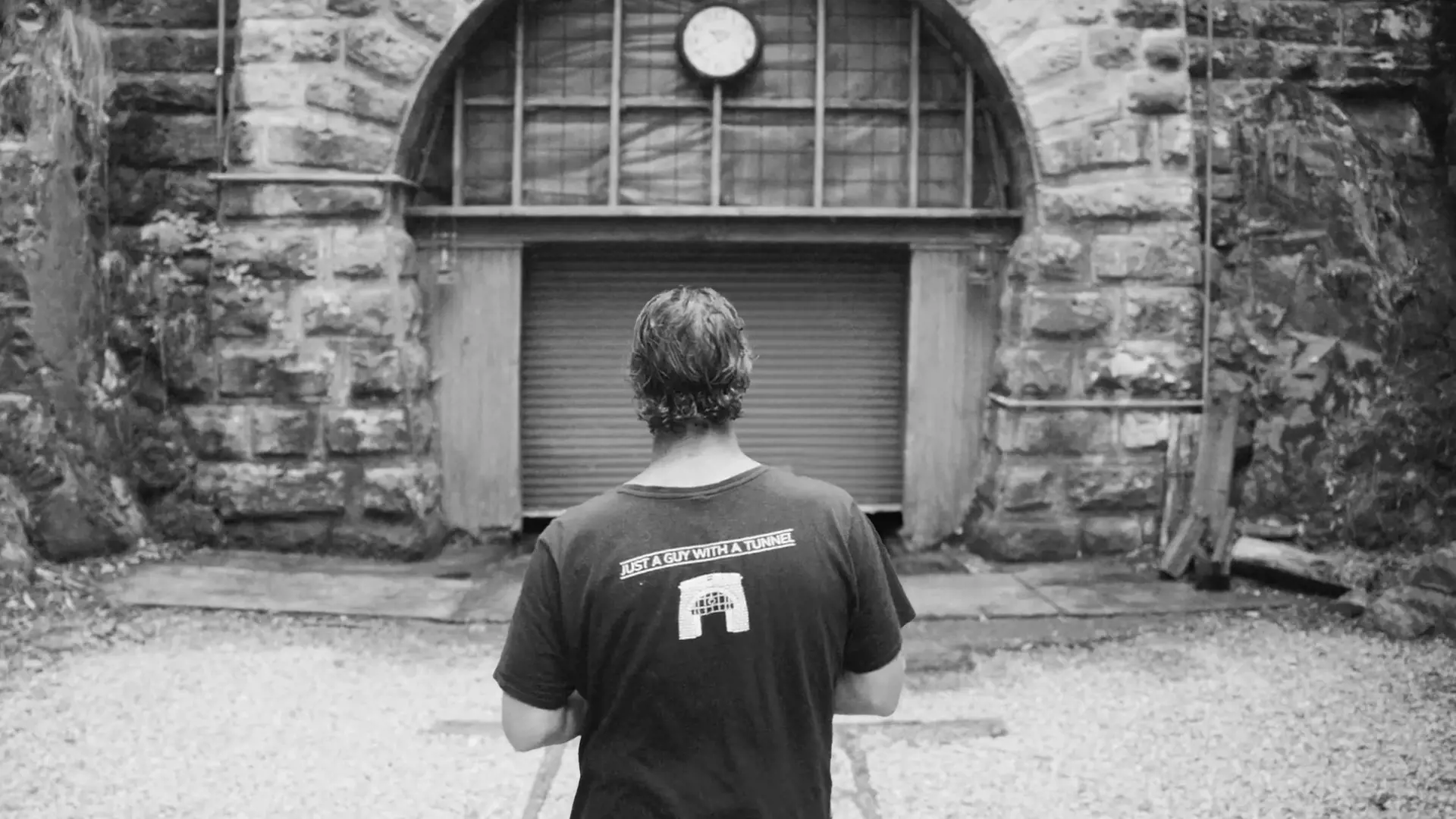
Built in 1891, the tunnel was part of a short-lived railway line, decommissioned in the 1920s, which connected Bellerive on Hobart’s eastern shore with the regional town of Sorell.
Visitors can take a sneak peek inside the historical tunnel on a guided tour and tasting.

What to expect
“It's going to be cold; it's going to be wet, but it's going to be mysterious. It's going to be unique,” Dean says.
Tour
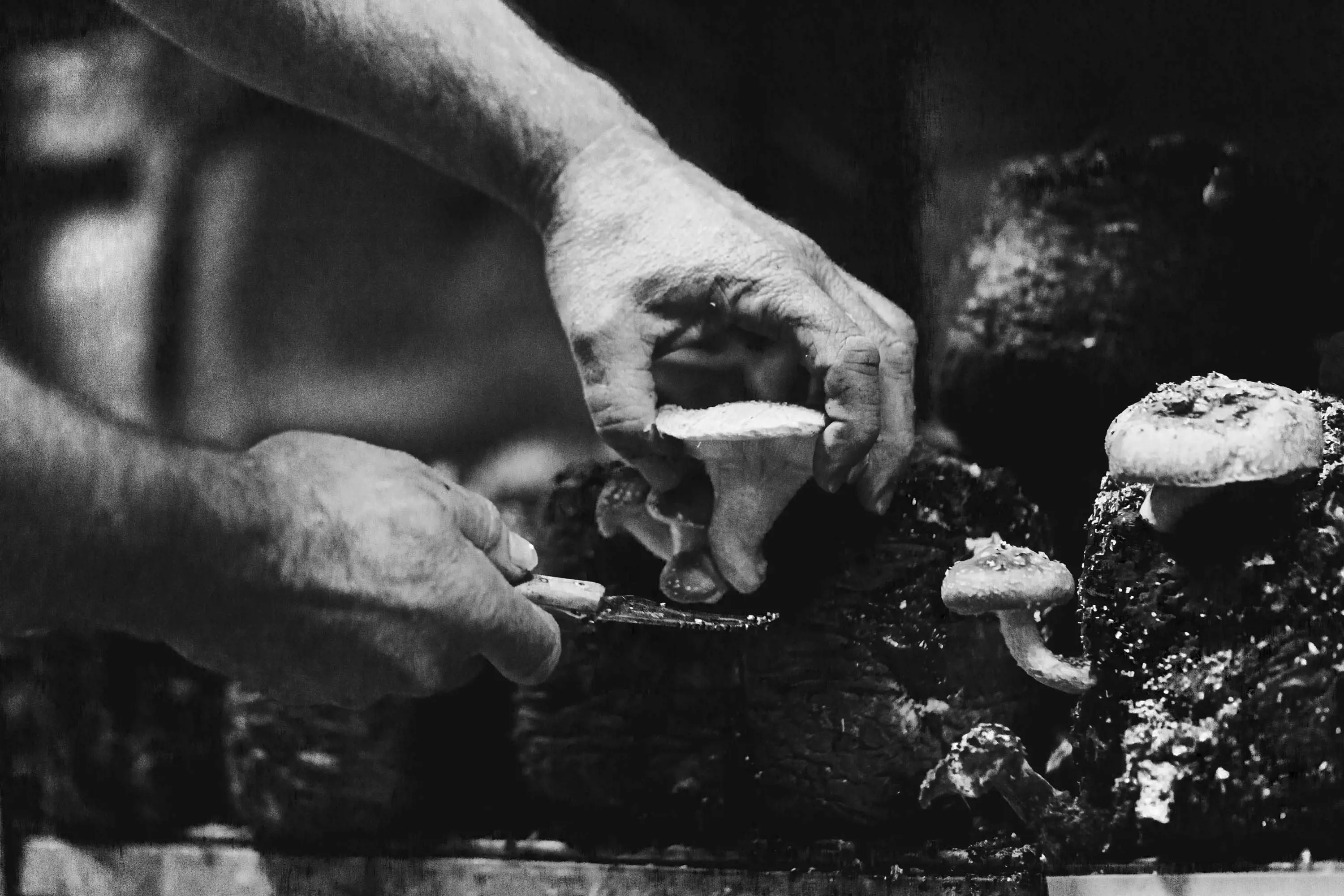
Dean shares his expertise on the art and science of mushroom cultivation, along with stories of the tunnel’s colourful history and its transformation into the fungi-filled space it is today.
Tasting
Next, guests pick moreish mushrooms, which Dean prepares and fries up for tastings on his novel wood-fired train barbecue.
This unpretentious cooking style heroes the fungi’s flavours and is Dean’s preferred method. “You just let them steam,” he says. “Get the moisture out of them and, when the sugars start to come out, they start to naturally caramelise. Then you can hit them with your fat, your butter, salt, lemon juice.”
Want more?
For those keen to get their hands dirty, Dean also hosts workshops where guests mix their own mushroom-growing bags to take home.
Ready for a winter foodie experience?
View all offers
Duck River Pavilions signature experience
Warming valley experience
Riverside stay and gourmet picnic near Freycinet
From reluctant grower to mushroom expert
Tunnel Hill Mushrooms came into being after a serendipitous knock at the door from a local mushroom industry guru, who prodded Dean into the unlikely field of mycology, the study of fungi.
“Up until then, I had no interest in mushrooms,” Dean says. “I didn't even really like eating mushrooms!”

Dean Smith at Tunnel Hill Mushrooms
These days, Dean is a self-proclaimed mycology nut, spending his days in the lab, culturing and cloning fungi.
His success has required plenty of trial and error: “Over the years, I've just learned to pick the right strains of mushrooms that like this environment.”
From tunnel to... plate?
Dean's tunnel-grown fungi have found their way onto some of Hobart's most celebrated menus, including Aloft, Peppina and Port Arthur's 1830 Restaurant and Bar. Dean can often be found plying his wares at Farm Gate Market and, in winter, he provides mushrooms for the decadent Dark Mofo Winter Feast.


More indulgent winter experiences in Tasmania
When Dean gets a moment to relax, his favourite local spot is the historical village of Richmond: “It's nice to sit down there at a vineyard and have a glass of red by the fire.”
For anyone looking to indulge beyond the tunnel, there’s no lack of tasty Off Season experiences during winter in Tasmania.
Tasty winter offers
View all offers
Pinot and cheese: Tasmania's unofficial state dish
Fireside wine and starry skies over the sea
A boozy winter nightcap. Zero regrets.
Christmas in July
Sample wine and BBQ your own winter feast
Dean’s Tassie winter recommendations
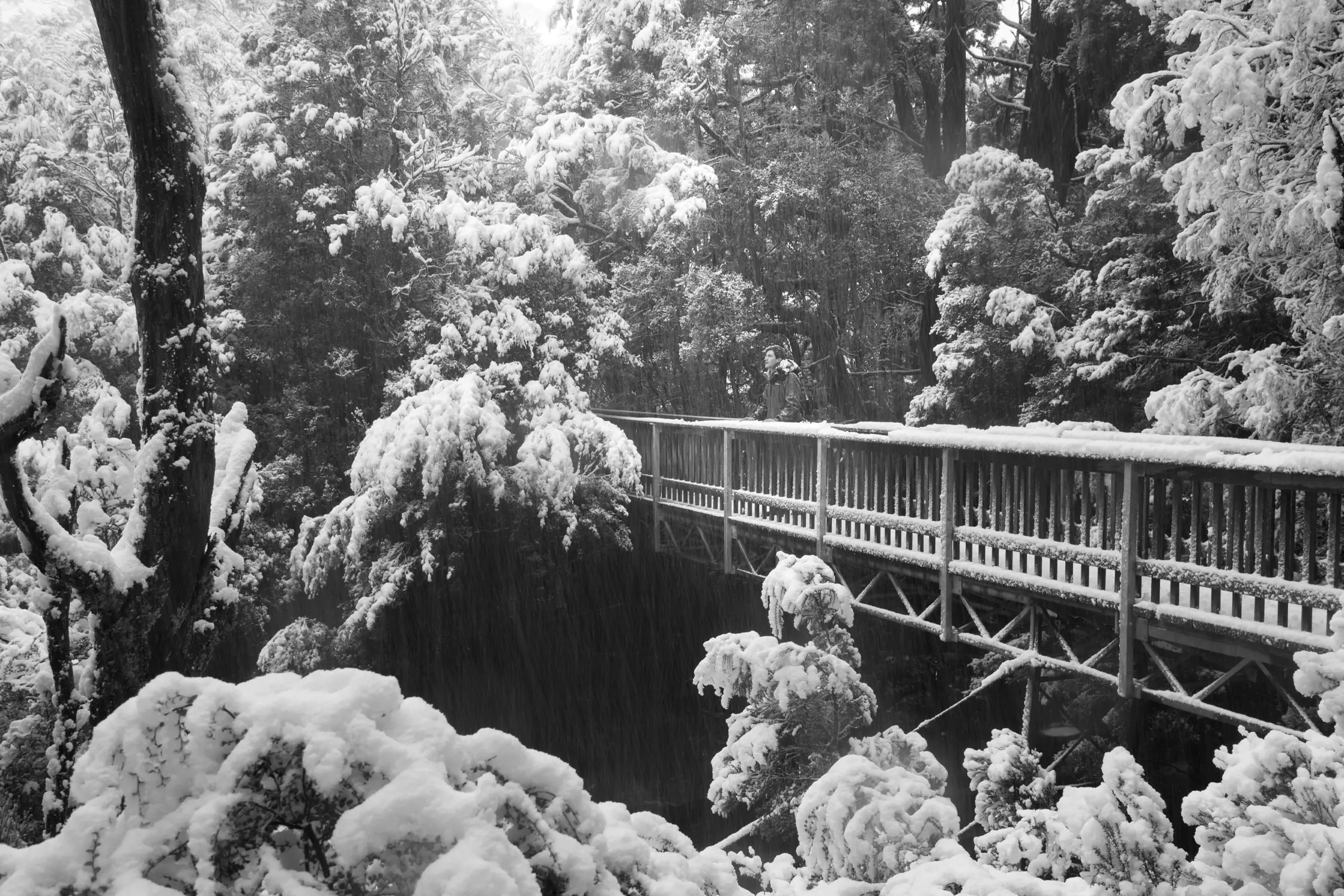
Further afield, Dean's preferred Off Season getaway is Cradle Mountain.
“Even though it's cold, it’s still lovely to walk around Dove Lake and just immerse yourself in that sort of wintry environment,” he says.
You can't get a better experience in winter than Tassie, because it's just got that lovely sort of crisp, fresh feel about it.
For Dean, the cooler weather is no issue. “I'm a winter person just by nature,” he says.
“If you're going to visit during winter, just embrace the winter – it's a magical time of year. Don't let it stop you from doing what you’ve come here to do."

Frequently asked questions about southern Tasmania
Renowned for its fresh produce, plump seafood, mouth-watering cheeses, cool-climate wines and refined whisky (among other things), Tasmania offers gourmet without the pretension. Across the island, tasting trails and farm experiences let you meet the makers and enjoy true paddock-to-plate dining.
In winter, the culinary calendar reaches its peak at the Dark Mofo Winter Feast – a multi-course celebration of fire-cooked feasting and Tasmanian ingredients.
Tasmania’s capital city has a sizzling food scene, packed with cosy cafes, indulgent restaurants, chic wine bars and friendly pubs.
Here are some top spots to try:
Breakfast
- Erda Cafe: Sunny corner cafe with seasonal menu and specialty coffee
- Villino Coffee: Tucked-away CBD cafe serving expertly roasted coffee and bites to eat
- Hamlet Cafe: Social enterprise cafe training people facing barriers to employment
Lunch
- Little Lotus Hobart: Dietary requirement-friendly eatery with nourishing vegetarian and vegan fare
- Sunbear: Homey space serving small plates piled with local produce
- Faro Bar + Restaurant at Mona: Restaurant and bar suspended over the River Derwent
Dinner
- Scholé: Seasonal, produce-driven restaurant and wine bar in a historic confectionary shop
- Templo: 20-seat neighbourhood restaurant with an Italian inspired set menu
- Bar Wa Izakaya: Casual izakaya-style dining with local produce as the hero.
You’ve eaten your fill of mushrooms and explored Hobart’s highlights, what next? Tasmania’s south combines wild nature with fascinating history and fine produce – and is easily accessible via Hobart airport. Hire a car and explore these must-visit destinations further afield:
- Port Arthur Historic Site: UNESCO World Heritage-listed convict settlement with 30+ historic buildings
- Kunanyi / Mount Wellington: Sweeping views of southern Tasmania, bushwalking and mountain bike trails
- Bonorong Wildlife Sanctuary: Conservation park with Tasmanian wildlife including wombats and Tasmanian devils
- Bruny Island: Artisan cheese, fresh oysters and dramatic landscapes
- Huon Valley: Apple orchards, cider houses, hiking and ancient trees.
Stay in the know
Don your woolly socks and subscribe to the Off Season newsletter to be the first to know about Tasmania’s winter festivals, experiences and special deals.