
You’re in for a shucking good time.

Cold water. Clean coastlines. Oysters that'll make you reconsider everything you thought you knew about seafood.


This little island in the Southern Ocean produces some of the world's best oysters. Meet Tasmania’s two main varieties: the creamy Pacific oysters and the meaty native Angasi oysters.

You’ll find the Pacific variety everywhere, from farm gates to restaurants and oyster bars. But Angasi oysters in Tasmania are rare, distinctive and only available from a handful of farms during the island’s cooler Off Season months. Searching for fresh oysters in Tasmania? Finding them is part of the fun.

Two people wearing wading overalls are slurping oysters straight from their shells. In the background are the still waters of an ocean's inlet.
Tourism Australia

History of Tasmanian oysters and the farming revolution

The Palawa (Tasmanian Aboriginal people) have been harvesting native Angasi oysters along these coastlines for more than 60,000 years, long before commercial oyster farms in Tasmania.

Palawa cultural food traditions involve cooking Angasi oysters over hot coals and heating them to create a firmer, earthier texture. These oysters have a long history of ceremony and connection to Country; Palawa cultural living sites with ancient shell deposits mark several traditional harvesting sites along the east coast.

Pacific oysters arrived in the 1940s from Japan. These briny bivalves adapted fast thanks to Tasmania's clean, cold waters, dominating commercial production within decades. These days, the island produces more than 3 million dozen oysters annually.

But the native Angasi nearly disappeared when overfishing in the 1800s decimated natural populations. Today, the island is home to the last remaining natural Angasi oyster reef in the world and a handful of Tasmanian oyster farms are working to revive the native species.

Types of Tasmanian oysters and their flavour profiles

Pacific oysters

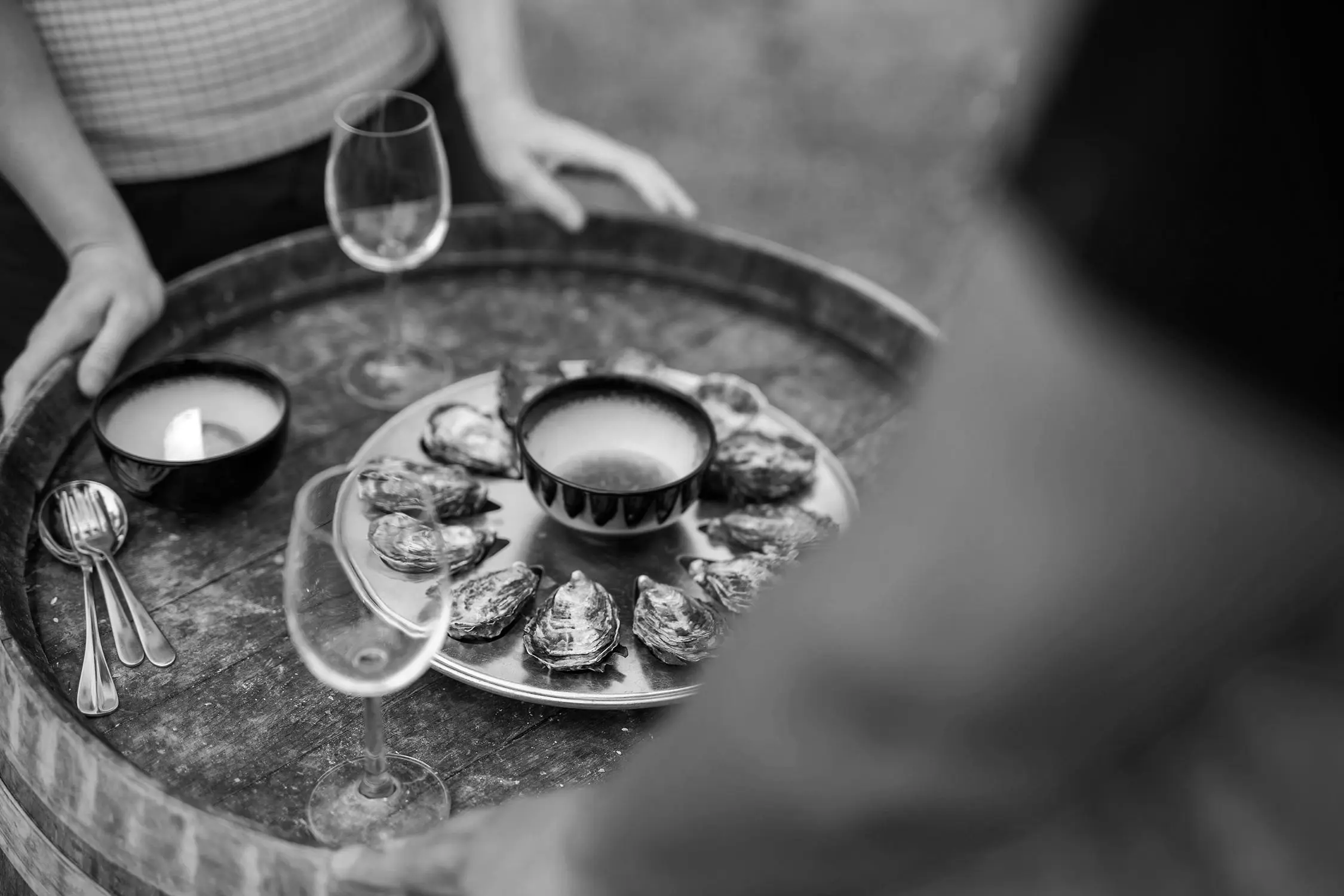
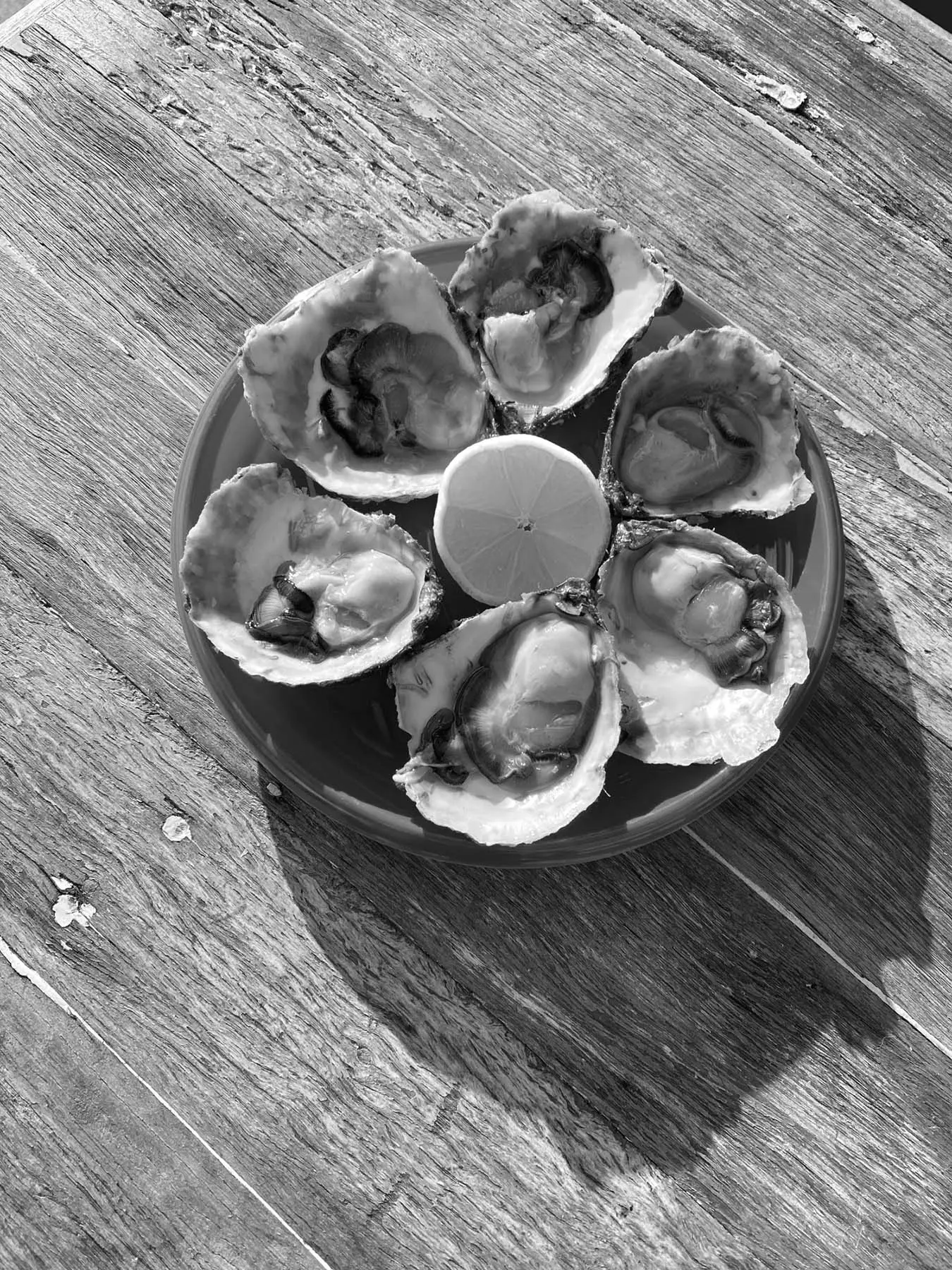
When you taste Tasmanian Pacific oysters (Crassostrea gigas), expect firm flesh, plump shells and a clean, sweet-savoury flavour with a cucumber finish. They're larger than Sydney Rock oysters and bake nicely with butter, herbs or indulgent Tassie saffron. Or eat them natural – they pair nicely with lemon or local mignonette.

Look for Pacific oysters at Tasmania’s oyster bars, restaurants, markets and farm gates in coastal havens like Bruny Island, Freycinet and Smithton. Keep an eye out for Tassie gold Pacific varieties with distinctive golden-brown shells – these longer-growing bivalves reward you with a richer flavour.

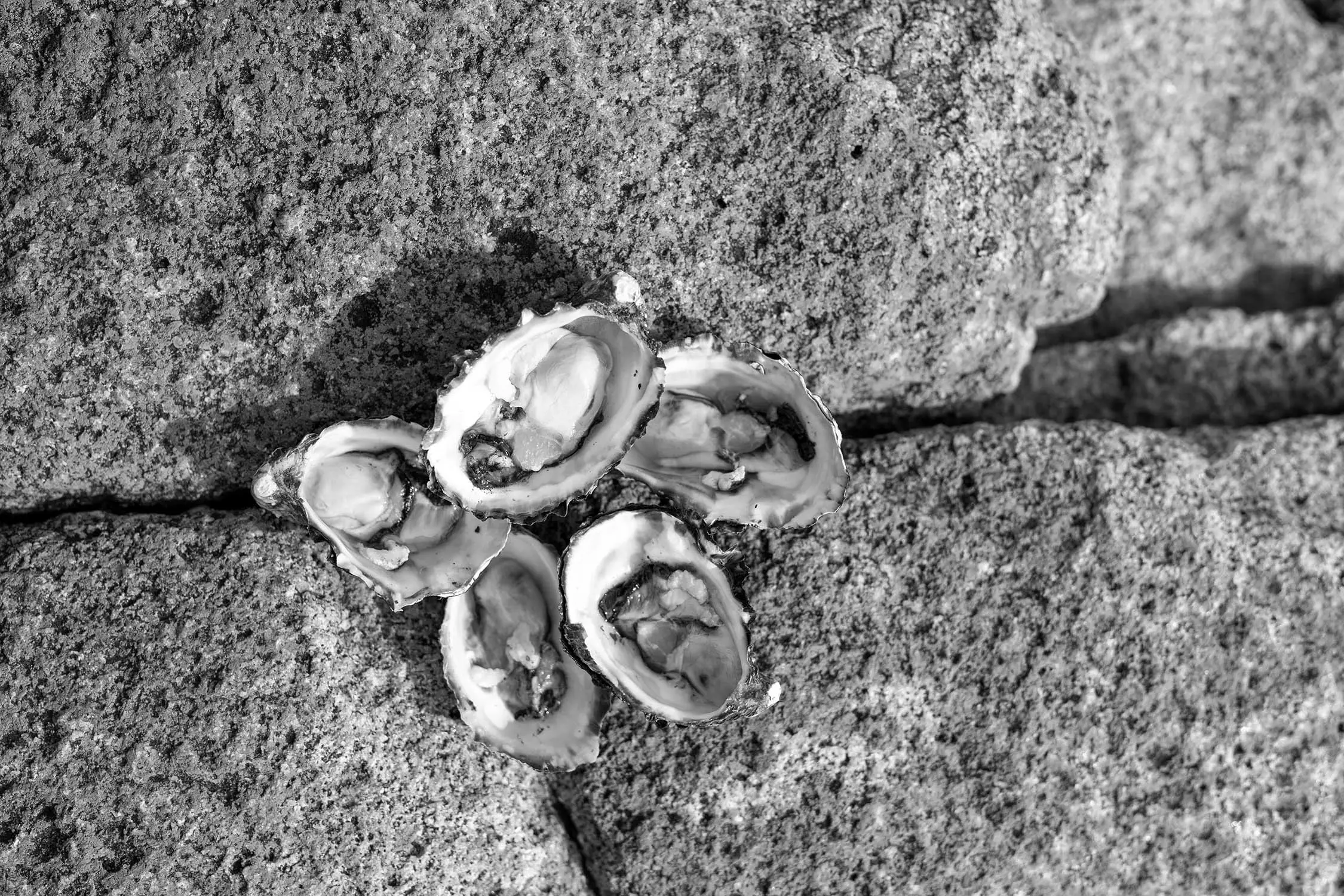
5 freshly shucked Tasmanian Pacific oysters sit on lichen-covered rocks.
Tourism Australia

Angasi oysters

Tasmania’s native Angasi oysters (Ostrea angasi) are quite the contrast to Pacifics – earthy and buttery with a complex umami finish, flat shells and firm texture. They're similar to European Belon oysters and best served cooked (but they’re tasty when natural too).

Angasi oysters in Tasmania are slow to grow. They're only available from late May–September, lining up nicely with Tasmania’s Off Season, when the island’s crisp waters produce Angasi oysters at their plump best.

Only a few Tassie farms cultivate them. Blue Lagoon Oysters in Boomer Bay (near the south-east fishing town of Dunalley) sells native Angasi at their farm gate, thanks to their unique intertidal and subtidal farming methods.

Check availability before you visit for these limited seasonal oysters.

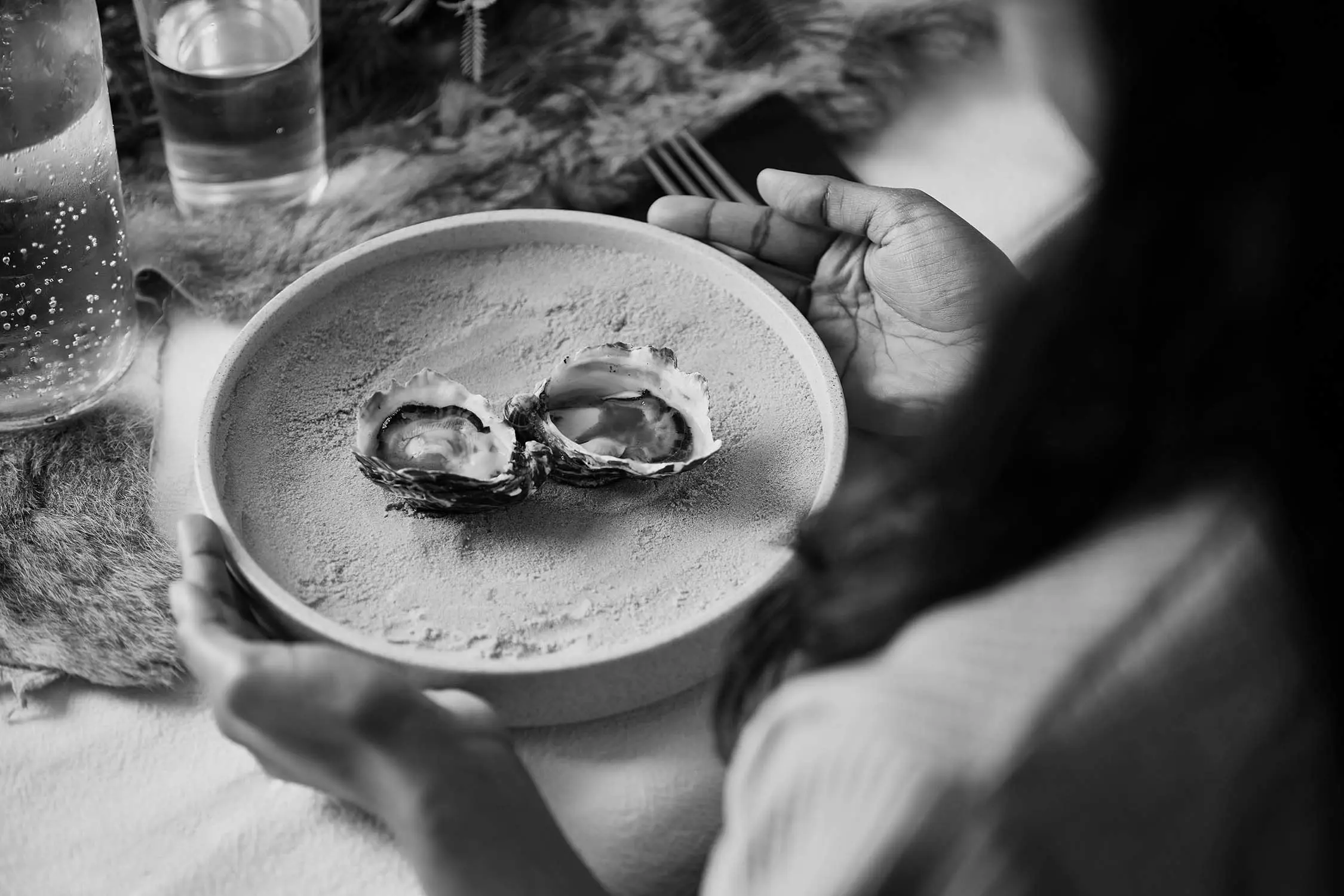
A person holds a textured ceramic plate with two shucked oysters sitting in their shells. On the table, sparkling water in a bottle and an animal pelt are visible.
Samuel Shelley

Varieties in a nutshell

Pacific oysters

  • Shell shape:  Deep-cup, rugged
  • Flavour:  Clean, bright salinity, sweet finish with cucumber notes
  • Texture:  Creamy and tender
  • When to eat:  Year-round

Angasi oysters

  • Shell shape:  Flat, round, smoother
  • Flavour:  Meaty, savoury, mineral-rich, metallic umami finish
  • Texture:  Firm and chewy
  • When to eat:  Late May–September (aka Tasmania’s Off Season).

What to look for when buying Tasmanian oysters

Follow your nose: fresh oysters smell like the ocean – clean, briny and slightly mineral.

Buying live oysters to take home? Bring a cooler with ice to keep them fresh.

The best oysters are those you can find close to the source – oysters sold directly at farm gates or at restaurants close to the coastline are always a promising pick. Being an island, Tasmania has plenty of high-quality coastal oyster spots to choose from – keep reading for our best picks.

Winter indulgence this Off Season

If you're planning an oyster experience in Tasmania during autumn or winter, you're hitting prime time. Cooler weather means varieties are at their best, crowds are thinner and you've got a genuine shot at finding those elusive native Angasi.

The Off Season brings with it a string of exclusive oyster and seafood offers, only in winter. Explore the offers: from succulent after-dark seafood cruises to warming winter baked bivalves and seaside getaways serving you the best oyster in Tasmania during your stay.

The bigger bivalve picture

In case you needed another reason to indulge, oyster farming in Tasmania is low-impact and sustainable. These bivalves filter algae and nutrients to naturally improve water quality.

Tasmania has the last remaining natural Angasi oyster reef in the world, with aquaculture and reef restoration projects helping to restore native populations.

Discover eco-travel experiences

From farm gate to plate

Discover our top must-slurp oyster spots.


East coast: Freycinet Marine Farm, Coles Bay

Freycinet Marine Farm sits in the waters of aptly named Great Oyster Bay, near tranquil Wineglass Bay. Stop by the on-site shop for freshly shucked Pacific oysters and mussels. Or get into the farm with Oyster Bay Tours: pull on waders, walk into the estuary, harvest oysters straight off the rack and learn to shuck them yourself. Tours start at $170 per person and include oysters, mussels and local Riesling. Expect a front-row view of where your food comes from, with Freycinet National Park as your backdrop.

Bruny Island and Hobart

Find a handful of farms on Bruny Island serving up some of best oysters in Tasmania.

If you can't make it to Bruny Island itself, these famous oysters are dotted around Hobart, Tasmania’s maritime-rich capital city. Find freshly shucked Bruny Island oysters at Salamanca Market every Saturday. Catch Hobart Twilight Market at Brooke Street Pier year-round or Long Beach Sandy Bay November–March on various Friday evenings, where Bruny Island oysters sometimes appear alongside local wines and live music by the water. Or track them down at Hobart waterfront’s major seasonal food festivals, from Tasmania’s Taste of Summer over the NYE period to the Dark Mofo Winter Feast in June.

Or try Hobart’s standout local restaurants: Pearl + Co at Victoria Dock is the city's dedicated oyster bar. Enjoy seasonal dressings or taste them natural, watching fishing boats bob around while you savour a satisfying dozen. Bar Wa Izakaya in North Hobart uses Japanese izakaya-style preparations showcasing local oysters four different ways: natural, sanbaizu, tempura, or baked with uni and miso. Daily oyster happy hour runs 4–6pm for half-price oysters with any drink (and trust us, you’ll want a tipple from this colossal cocktail menu). Arrive early or book ahead.

Beyond Hobart: Barilla Bay Oyster Farm, Cambridge

A roughly 20min drive north-east of Hobart’s city centre near Hobart International Airport, Barilla Bay Oyster Farm offers the full experience with its working lease, restaurant, retail shop and tours. Try Pacific oysters alongside other Tasmanian seafood in the upstairs restaurant. Downstairs, find everything from fresh oysters to local produce in the gourmet shop.

Tours run Thursday–Saturday, covering oyster farming, ginger beer production and abalone cultivation. It's the ideal stop if you're flying in or out of Hobart and want to bookend your trip with fresh oysters, Tasmania-style.


East coast: Melshell Oyster Shack, Dolphin Sands

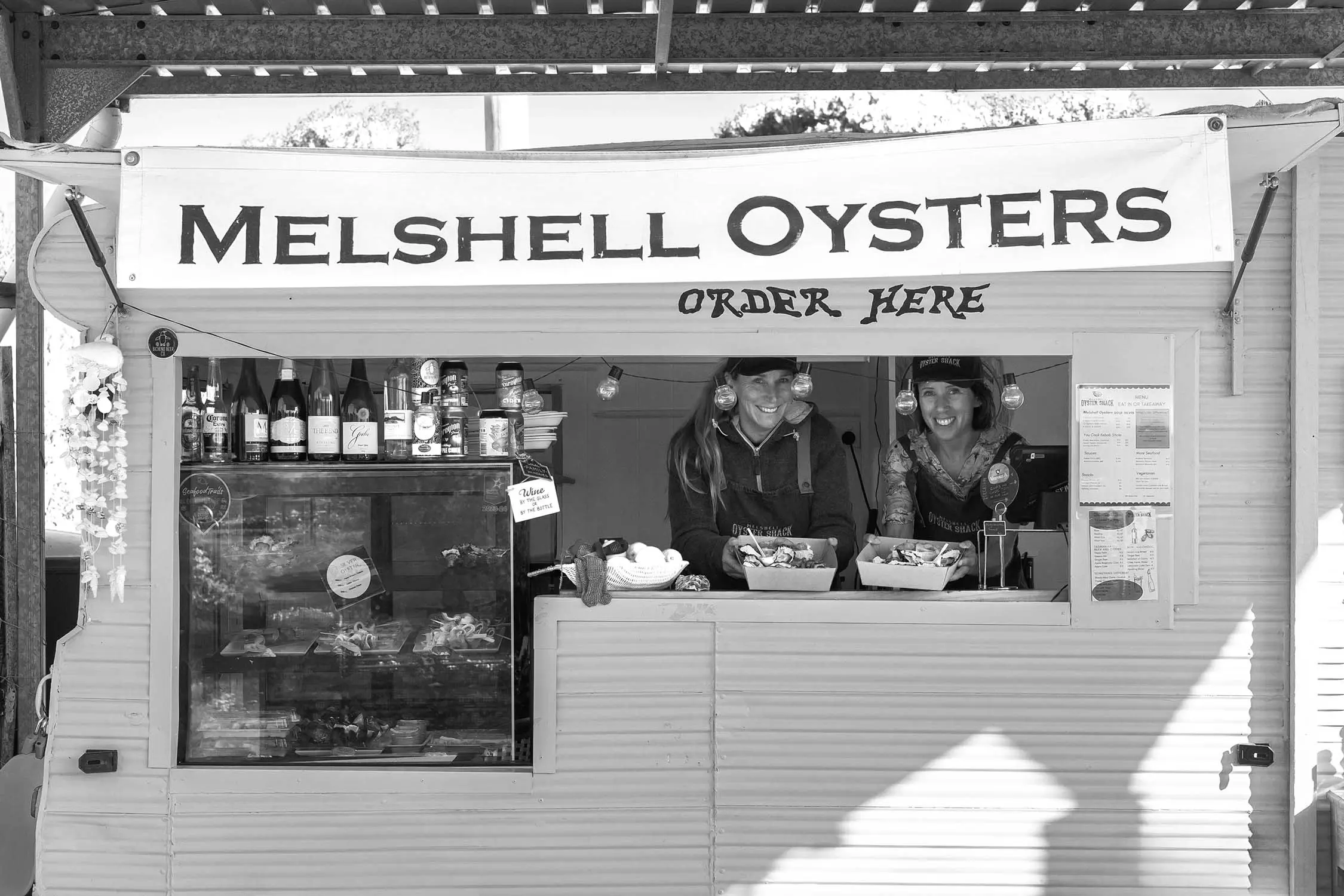
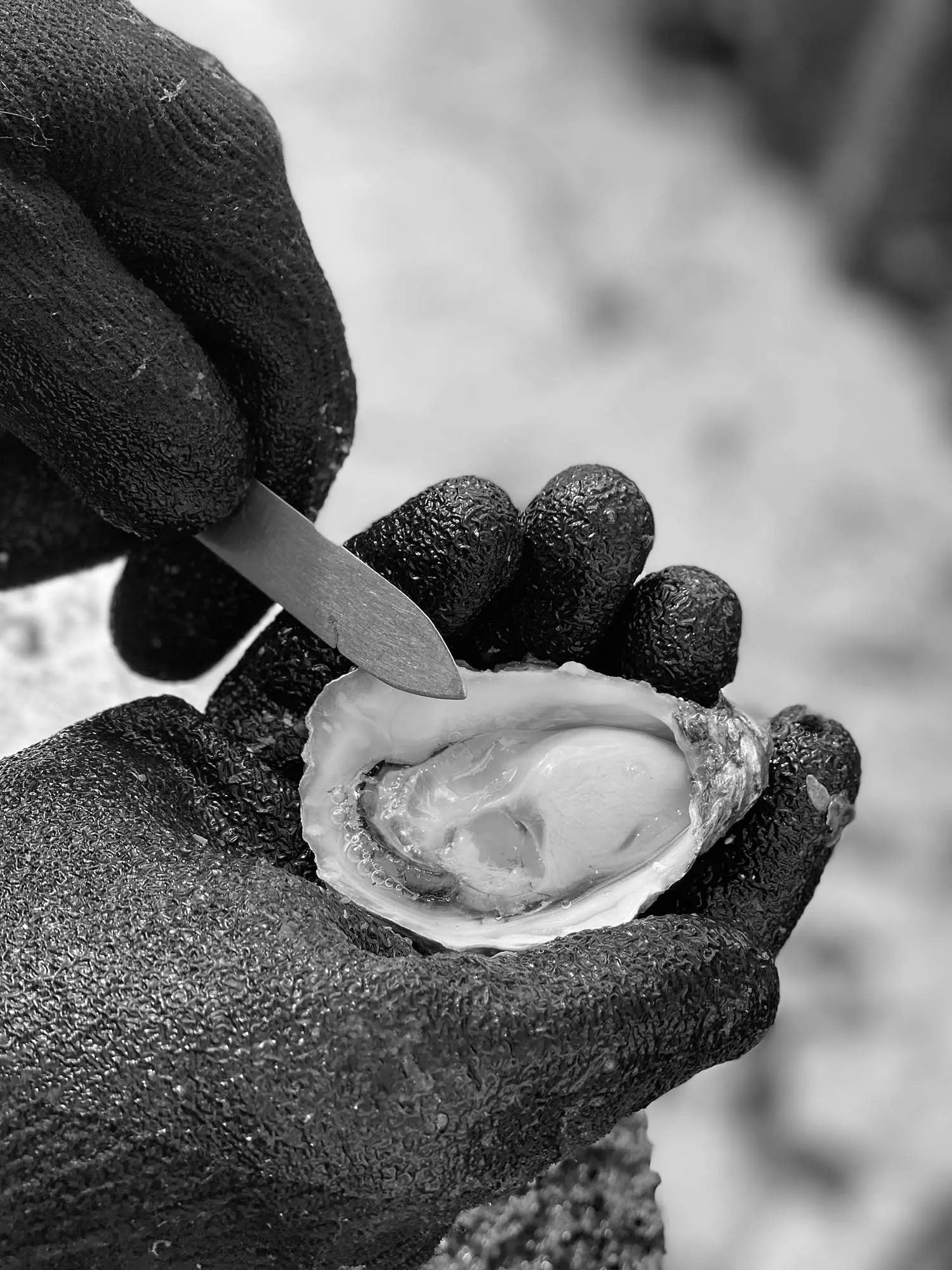
Fifteen minutes north of Swansea at Dolphin Sands, discover Melshell Oyster Shack: a funky blue van overlooking Moulting Lagoon. The Melrose family has farmed Pacific oysters here since 1984, using longlines in Great Oyster Bay and cylinder baskets in Swan River. Pull up at the picnic tables on the riverbank, sample the gold and silver varieties and kick back and relax, or try a shucking lesson. Open 10am–4pm, Monday–Friday.

A black and white photograph shows two staff members standing behind the counter of a caravan. There is a display case, bottles on shelves, and a sign reading "Melshell Oysters" hung overhead.
Oscar Sloane

North west: Tarkine Fresh Oysters, Smithton

On Tasmania's north-west coast in Smithton, Tarkine Fresh Oysters grows award-winning Pacific oysters in some of the cleanest air you'll find anywhere on Earth. The retail outlet and cafe sits on the banks of Duck River, serving freshly shucked oysters and a full menu from 11am–2pm Tuesday–Saturday. Try them natural, baked Kilpatrick-style or deep-fried, or order the Tarkine mix tray with one of each flavour. Or tour the processing facilities if you want to understand how the oysters travel from lease to plate. It’s also an easy stop on the Tasmanian Tasting Trail if you're embarking on your own Tassie food safari.


Turrakana / Tasman Peninsula: Blue Lagoon Oysters, Dunalley

Just off the Arthur Hwy before Dunalley (a 50min drive east of Hobart), the setup is simple – a farm gate outlet overlooking calm waters between Marion Bay and Dunalley. You’re here for oysters pulled from the bay that morning.

Open seven days, the farm makes a convenient stop heading to or from Port Arthur.

Tasmania's oyster scene isn't about fancy platters or white tablecloths (though those exist if that's your thing). It's about pulling up at a farm gate beside the bay where your lunch was growing this morning. It's waders and wine, tide charts and tasting notes. It's the kind of experience that makes you wonder why you've been eating oysters anywhere else.

Tasmanian oysters FAQs


Tasmania grows two main oyster species: Pacific oysters (Crassostrea gigas) and Angasi oysters (Ostrea angasi). Pacific oysters are the most common – find them year-round at most Tasmanian oyster farms for a sweet, briny flavour and firm texture. Some farms also cultivate Tassie gold oysters, a premium Pacific variety with golden-brown shells. Angasi oysters are the native variety – rarer, meatier and only available from late May–September.


Pacific oysters have cupped shells, a sweet-savoury flavour with cucumber notes and firm, plump flesh. They're versatile – good raw or cooked. Angasi oysters have flat shells, a rich buttery flavour with earthy, umami notes and a meaty texture. They take 30–40 months to grow (compared to 12–18 months for Pacifics) and the Palawa (Tasmanian Aboriginal people) have traditionally cooked them over hot coals for more than 60,000 years. Angasi are rarer and only available seasonally.


Yes, Angasi oysters (Ostrea angasi) are native to southern Australian waters and have been harvested by the Palawa since the beginning of time. While overfishing nearly wiped them out in the 1800s, farms like Blue Lagoon Oysters are working to revive native Angasi populations.


Pacific oysters are available year-round. Angasi oysters in Tasmania have a strict late May–September season. This cooler-month availability coincides with Tasmania's Off Season, when crowds thin out and oyster quality peaks.


For Pacific oysters, Freycinet Marine Farm (Coles Bay) offers wader tours and tastings and Barilla Bay Oyster Farm (near Hobart) combines a restaurant, shop and tours. Hunt them down at seaside farm gates, markets and oyster bars such as Bar Wa Izakaya and Pearl + Co. For rare Angasi oysters: Blue Lagoon Oysters in Dunalley sells them in the cooler months (late May–September). Add these oyster stops to your own personalised itinerary with our Trip Planner.

Where will the Off Season take you?

Fill your nights with wild wonder, expand your creative horizons, hike deep into Tasmania’s wilderness, and taste seasonal feasts and silky libations. Maybe you’ll even shatter the bounds of your comfort zone on a caving or cold-plunging adventure? Awaken your winter self.

Plan your Off Season

Stay in the know

Don your woolly socks and subscribe to the Off Season newsletter to be the first to know about Tasmania’s winter festivals, experiences and special deals.

Please add a valid name
Please select your location
A close-up of human knees caked with dried mud. In the background, a group of people blurred in motion, in the middle of a football game.

By creating an account on Discover Tasmania, you agree to the terms of use outlined in our Privacy Statement

Success!

You are now signed in.

Trip Planner

It looks like you're serious about planning a trip to Tasmania.
Sign in, or create a Discover Tasmania account so you can keep adding items to your trip. create multiple trips, and more.
I'll do this later
Continue exploring

Add to Trip Planner

Which trip would you like to add to?

Item added to Trip

View Trip

You have nearly reached the Explore Map plot limit of 27 items per itinerary.

Try splitting itineraries, rather than creating one large itinerary.


Manage trips
Please try again in a few moments.

Save your trip

You have a trip stored, would you like to save it?